
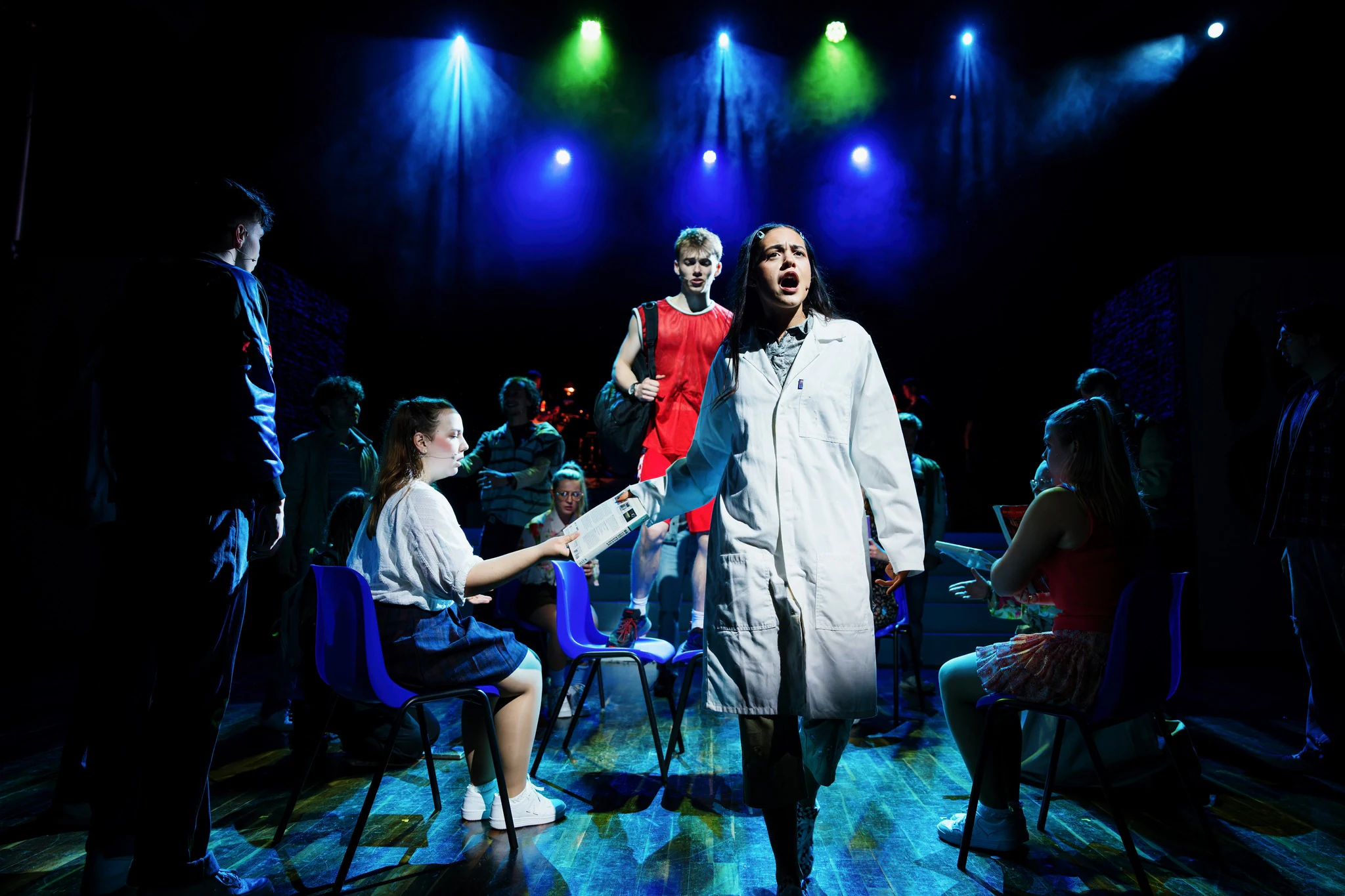
Explain what the audience should notice
Start with the production rather than a preferred fixture. What should feel intimate, energetic, exposed or theatrical? Which moments change the audience’s attention? Describe the important scenes, performers or objects and what lighting needs to contribute to them.
Reference photographs can help, but explain what you like in each one: the direction of light, contrast, colour, texture or sense of space. A photograph of a large arena does not automatically translate to a small theatre. Treat it as a conversation about an effect, not a promise to reproduce the whole image.
Share the material that affects the design
Provide the latest script, music or running order and mark versions clearly. Add the set plan and any available costume references. Explain how performers move through the space and whether the audience sits on one side, on several sides or within the performance.
Flag practical constraints early: a scene that must be seen behind a translucent surface, a projection that needs a darker area, a reflective costume, a tight changeover or cameras capturing the performance. These are design inputs, not details to discover after equipment has been booked.
- Script, score, set list or running order with a version date.
- Stage and set drawings, dimensions and audience arrangement.
- Reference images with a short explanation of the desired quality.
- Venue technical specification and available lighting equipment.
- Known filming, projection, access or changeover constraints.
Separate design from delivery roles
Lighting design decides the visual approach. Programming turns that approach into control settings and cues. Installation, focusing and show operation are related tasks but should not be assumed to be included in the word ‘design’.
State what the venue and production team can provide and what you want 10 out of 10 to cover. A touring production with its own operator may need a different arrangement from a one-off show starting without technical staff. Ask for the roles and deliverables to be written into the scope.
Make the schedule part of the creative brief
List design meetings, site access, equipment installation, focusing, plotting and technical rehearsal. Identify when scenery will be ready and when performers will be available. A design cannot be fully checked against blocking that has not yet been shared.
Leave a way to agree changes. Name the person who signs off the design and explain how notes from the director, venue and other departments will be brought together. Contradictory instructions from several people can consume the time intended for refining the show.
Prioritise when time or budget is limited
List the essential visual outcomes first and say what is flexible. It may be more valuable to make key scenes readable and distinct than to introduce a complicated effect that cannot be rehearsed properly. Ask which choices have the largest effect on equipment, staffing or programming time.
A useful final brief ends with decisions still needed, not just aspirations. Record who will supply the remaining information and when. That keeps the design moving without turning assumptions into a fixed equipment order too early.
Put it into practice
Before the first design conversation
- Describe the production and the audience experience you want.
- Send the latest creative material and venue specification.
- Identify the design, programming, equipment and operating roles needed.
- Provide the full schedule, including focusing and rehearsal.
- Name the decision maker and separate essentials from optional ideas.
Technical references
Manufacturer and official guidance behind the technical points in this article. Follow the instructions for the specific equipment and the arrangements agreed with your venue.
Help with the job
Lighting designExplore the service or ask the team about your own requirement below.