
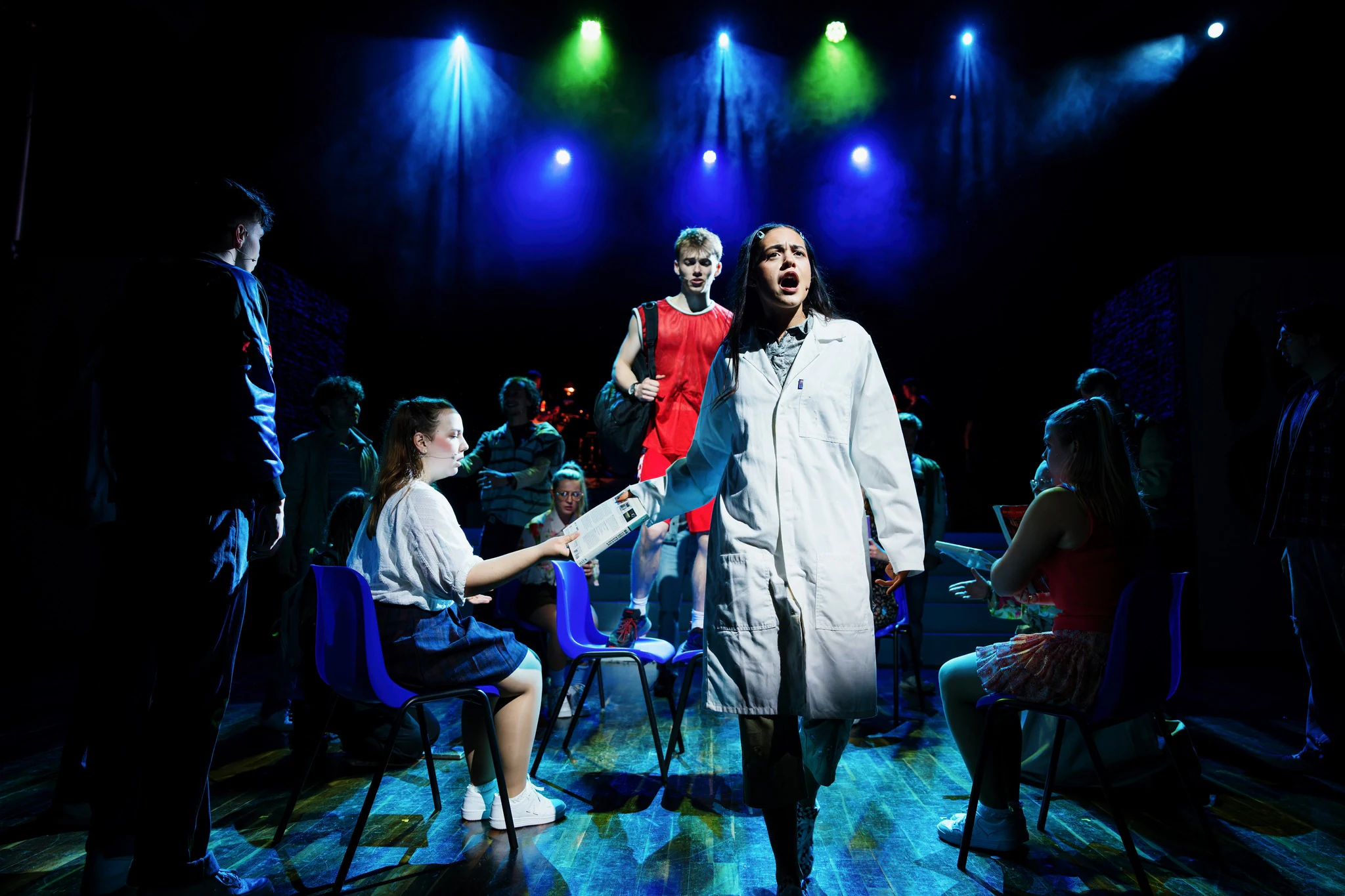
Think about the edge of the light
If you want adjacent areas to blend across a stage, a soft edge can be useful. If you need to keep light away from a screen or define a lectern area, the ability to shape the beam becomes more important. Neither fixture is universally ‘better’; they solve different parts of a lighting plan.
A profile can also produce a softened edge when focused appropriately. The distinction is about the available control, not a rule that every profile must always make a sharp circle.
Describe the job before choosing the lantern
Give the supplier the distance from the lighting position to the target and the approximate area to cover. A suitable beam angle matters as much as the fixture category. Ask about the specific lens or zoom range rather than assuming every profile or Fresnel has the same coverage.
| Requirement | What to discuss |
|---|---|
| A blended acting-area wash | Coverage, overlap and the available lighting positions. |
| A lectern beside a screen | Beam shaping and keeping spill off the image. |
| A texture or projected pattern | Compatible profile, gobo and useful focus distance. |
| A low-ceilinged hall | Positions, angles and the practical beam spread. |
Check the rest of the system
The fixture choice also involves power, control, mounting and access for focusing. An LED fixture and a tungsten fixture may have different supply requirements even if both are described as profiles. Share the venue’s existing system when hiring additional equipment.
For a small production, begin with useful visibility of performers and add separate fixtures for specific moments. A well-defined brief avoids hiring several similar-looking lights that do not perform the particular job you need.
Put it into practice
Useful information for the hire team
- The area or object to light and whether its edge needs shaping.
- The lighting position and approximate throw distance.
- Existing power, control and any projection nearby.
Technical references
Manufacturer and official guidance behind the technical points in this article. Follow the instructions for the specific equipment and the arrangements agreed with your venue.
Help with the job
Lighting equipment hireExplore the service or ask the team about your own requirement below.
View hire prices & build a list