
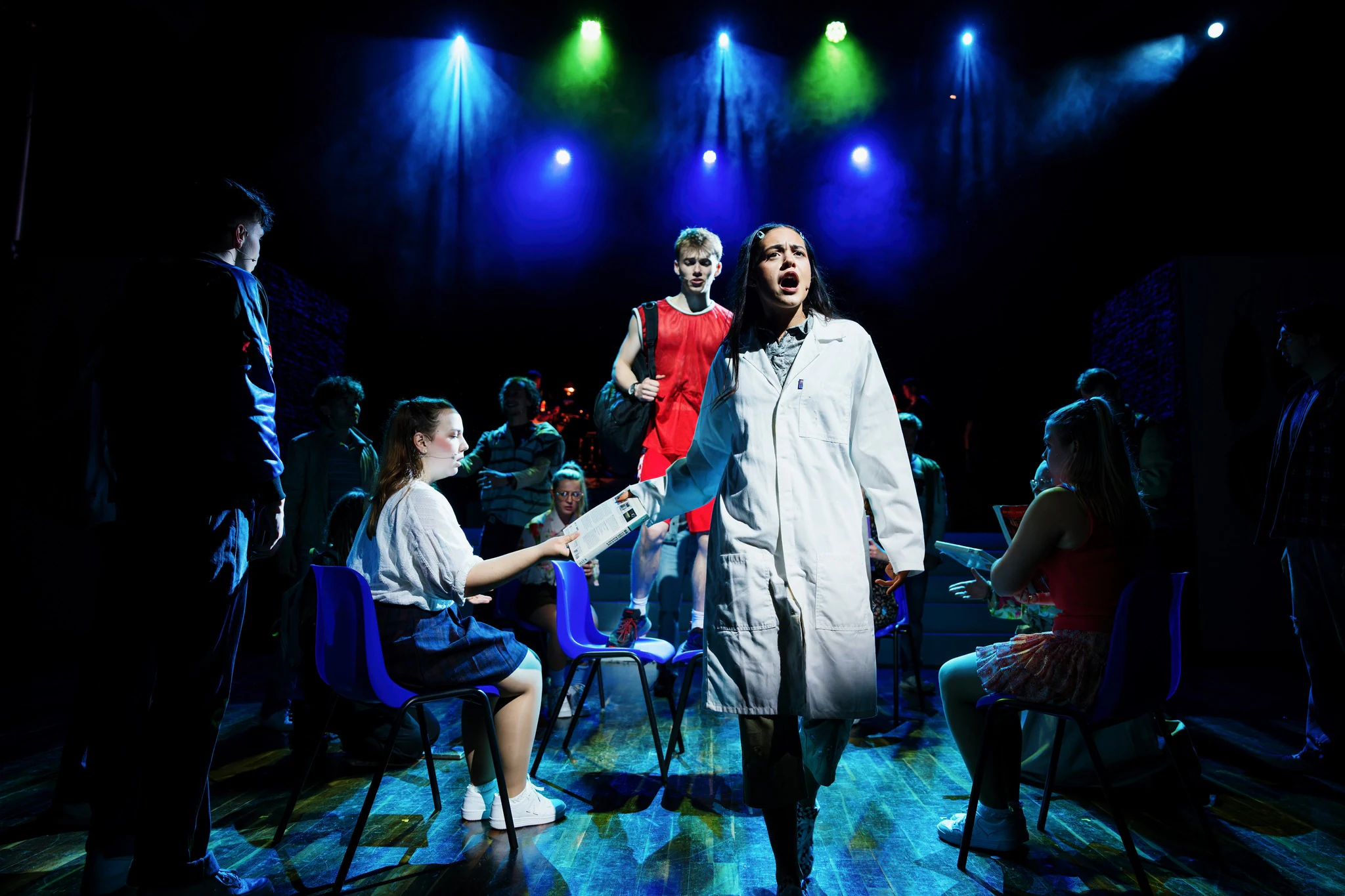
Draw the performance areas
Sketch the usable stage and audience arrangement. Mark acting areas, entrances, raised platforms, a lectern or any performance that happens away from the main stage. Note scenery that could block a light or cast a shadow onto a performer.
Then read the programme or script with that plan beside you. Identify moments that need the full stage visible and moments that need attention on one person or place. A simple plan with these decisions is more informative than a list of attractive fixtures with no defined job.
Separate visibility from atmosphere
Light for faces and light for colour have different purposes. Start by making the principal acting positions readable to the audience. Add background, side or back light where it helps shape the scene and separate performers from their surroundings.
A saturated background can look impressive while leaving a face difficult to read. Check the scene from the audience position, including the sides of the room, and consider costume and scenery colours. If the event is being filmed, discuss that early: a camera adds another set of exposure and colour considerations.
Give each type of fixture a job
Soft-edged washes can cover groups or blend adjacent areas. Profile fixtures can help define a more precise area, such as a lectern or a particular part of the set. Moving lights can change position, colour or effect during a show, but they still need suitable optics, control and programming time.
Choose equipment after the positions and jobs are understood. A fixture that works from a nearby bar may not suit a long throw across a hall. Ask the supplier to confirm coverage and mounting requirements for the actual venue rather than selecting solely by power or appearance.
| Required result | Question for the lighting plan |
|---|---|
| Clear dialogue | Can the audience see faces throughout the acting area? |
| A specific moment | Does a lectern, entrance or soloist need separate control? |
| A change of mood | Which parts of the stage change, and what remains readable? |
| Visible beams | Is an atmospheric effect appropriate and approved by the venue? |
Check what the venue can support
Obtain the existing lighting plan and inventory if available. Ask which positions may be used, who authorises attachments and what power and control systems are installed. An available bar is not confirmation that it can carry a proposed rig.
Electrical work, rigging and work at height need competent planning and execution. Keep the customer brief focused on the desired result and the venue information; let the responsible specialists determine the safe installation. Include access for focusing and future maintenance as well as the initial setup.
Allow time to focus and rehearse
Lighting needs adjustment with scenery and performers in their working positions. Build that time into the schedule. A fixture can be switched on and functioning while still missing the actor it is meant to light.
Prepare a cue list with scene changes, music or spoken triggers. Rehearse the transitions, including any dark moments and movement on or off stage, within the production’s agreed safety arrangements. Keep a record of changes so the operator is following the same version as the director and stage team.
Put it into practice
A useful lighting-plan starting point
- Stage and audience plan with all performance positions marked.
- Script or programme and the moments needing separate lighting.
- Scenery, costume and any filming requirements.
- Venue lighting inventory, permitted positions, power and controls.
- Installation, focusing and technical rehearsal time.
Technical references
Manufacturer and official guidance behind the technical points in this article. Follow the instructions for the specific equipment and the arrangements agreed with your venue.
Help with the job
Lighting designExplore the service or ask the team about your own requirement below.